Scheduler 决定 what to run this step;ModelRunner 决定 how to run it on GPU。如果说 Scheduler 把动态请求队列压缩成 SchedulerOutput,那 ModelRunner 就负责把这份调度结果翻译成连续 tensor、KV cache slot、attention metadata、forward context、logits 和 sampled token。
所以 ModelRunner 确实是推理执行核心。它不负责 HTTP 接入,也不负责全局排队策略;但一旦 scheduler 给出 SchedulerOutput,模型真正跑起来的过程就在这里展开。
这篇接在 Scheduler 后面读;如果还没建立全链路地图,可以先看 request lifecycle。
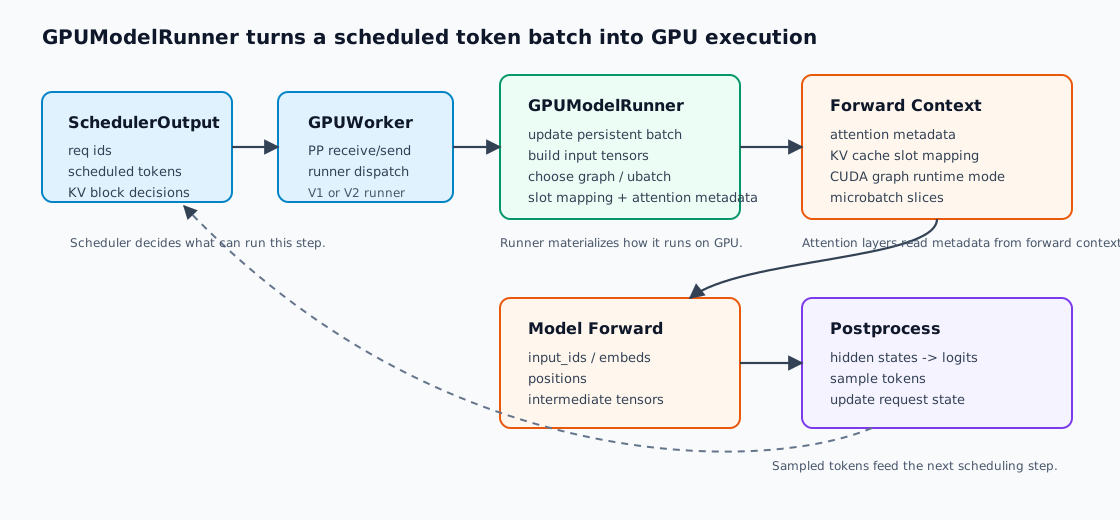
Figure 1: GPUModelRunner sits between SchedulerOutput and the actual model forward. It owns input materialization, attention metadata, KV slot mapping, forward context, logits, and sampling state.
从一个小 batch 开始
假设这一轮 scheduler 给了两个 request:
| request | 已算 token | 本轮调度 token | 阶段 |
|---|---|---|---|
| A | 4 | 1 | decode |
| B | 0 | 3 | prefill chunk |
从 scheduler 看,这是一个很自然的 mixed batch:A 继续 decode 一个 token,B 开始 prefill 三个 token。但 GPU 不能直接执行“request A 一个,request B 三个”这种高层描述。ModelRunner 要把它变成更低层的数据:
| 数据 | 含义 | toy batch 里的形状 |
|---|---|---|
input_ids | 本轮真正送进模型的 token | [A4, B0, B1, B2] |
positions | 每个 token 在原序列里的位置 | [4, 0, 1, 2] |
query_start_loc | 每个 request 在扁平 token batch 里的边界 | [0, 1, 4] |
seq_lens | 本轮 forward 后的乐观长度 | [5, 3] |
slot_mapping | 每个 token 的 KV 写入/读取物理位置 | 由 block table 计算 |
logits_indices | 哪些 hidden state 需要算 logits | 通常每个 request 最后一个位置 |
这就是读 ModelRunner 的关键:它不是“调用 PyTorch model”这么简单,而是在调度、KV cache、attention backend、CUDA graph、pipeline parallel、speculative decoding 和 sampling 之间维护一组执行不变量。
源码入口和执行流程
本文看 vLLM V1 主线:
| |
GPUWorker 是 worker 层入口。它处理 pipeline-parallel rank 之间的 tensor 收发,然后把本轮 SchedulerOutput 交给 model_runner.execute_model()。当前源码里,GPUWorker 可以按配置选择 V1 runner 或 V2 runner;本文用 V1 讲机制,因为它把职责集中在一个文件里,更适合第一次源码阅读。
GPUModelRunner.execute_model() 本身是两段式的:先 preprocess、forward、compute logits,把临时状态塞进 ExecuteModelState,然后返回 None;后续 GPUWorker.sample_tokens() 再调用 model_runner.sample_tokens() 完成采样、更新 request 状态,并产生 ModelRunnerOutput。这个拆分服务于 async scheduling、pipeline parallel、speculative decoding 和 structured output。
一次 execute_model() 可以压成这张表:
| 阶段 | 做什么 | 为什么重要 |
|---|---|---|
| 更新 persistent batch | 把 SchedulerOutput 增量同步到 runner 的 batch 状态 | 避免每步从 Python 对象重建大 tensor |
| 准备 input tensor | 生成 req_indices、input_ids、positions、query_start_loc、logits_indices | 把 request-level 决策压成 token-level tensor |
| 决定执行形状 | 选择 padding、CUDA graph mode、microbatch、跨 DP token 数 | 在动态请求和 GPU 稳定形状之间折中 |
| 构造 attention metadata | 计算 block table、slot mapping、seq lens、prefill/decode/spec 状态 | attention backend 靠这些信息读写 KV cache |
| forward 与采样 | 在 set_forward_context(...) 下调用模型,计算 logits,再 sample | 产生下一轮 scheduler 需要的 token 和状态 |
真正的模型调用很短:
| |
但这段短代码站在大量准备工作之上。set_forward_context(...) 已经设置好 attention metadata、slot mapping、CUDA graph runtime mode、microbatch slices 等信息;input_ids、positions、inputs_embeds 和 pipeline intermediate tensors 也已经按执行形状准备好。
这个边界很重要:具体模型类负责 transformer block、MLP、MoE、logits head 等结构;ModelRunner 和 attention backend 负责告诉这些层“这次 batch 的 KV cache 和 attention 运行环境是什么”。二者合起来才是一次高性能 forward。
为什么 V2 要重写这层
vLLM 源码里已经有 Model Runner V2 设计文档。它的存在本身说明:ModelRunner 是推理执行中最容易堆复杂度的位置。
| 问题 | V1 的压力 | V2 的方向 |
|---|---|---|
| persistent batch | state 和 input tensor 耦合,重排复杂 | 持久状态与 per-step input 解耦 |
| async scheduling | CPU/GPU 异步拷贝容易出现 race | async-first,减少同步屏障 |
| block table 更新 | 大 tensor 每轮复制成本高 | staged write,只提交增量 |
| sampling | Python/torch 组合路径复杂 | Triton-native sampler |
| CUDA graph | capture/launch 逻辑隐式 | 显式 CUDA graph manager |
| 文件结构 | V1 gpu_model_runner.py 巨大 | 拆成更模块化的 runner 组件 |
读 V1 是为了理解机制,读 V2 是为了理解工程演进方向。推理框架难的地方,不是“能不能调用 model.forward”,而是能不能在动态请求流、KV cache、attention backend、采样、并行通信和 CUDA graph 之间保持一致的不变量。
vLLM-Omni 如何扩展这个边界
vLLM-Omni 没有把 vLLM ModelRunner 丢掉。它复用这个边界,再往上扩展多模态和多阶段执行。
在 vllm-omni 源码里,OmniGPUModelRunner 继承自 vLLM 的 GPUModelRunner。GPUARModelRunner 面向自回归 stage,保留两阶段 execute/sample 语义,同时把 per-request hidden representations、多模态输出、connector payload 等信息带回上层。GPUGenerationModelRunner 面向非自回归 generation stage,复用输入准备、多模态处理和 TP/PP/DP glue,但它不计算 logits,也不执行 token sampling,而是把生成过程的结果通过输出字段返回。
更一般地说:vLLM 的 ModelRunner 是 AR transformer serving 的执行核心;vLLM-Omni 把这个执行核心放进更大的 stage graph。文本 token、语音 token 这类自回归阶段仍然可以落回 scheduler、KV cache、attention metadata、model runner 体系;diffusion、vocoder、code2wav 这类非 AR 阶段则需要专门的 runner/output 协议。
读源码时抓住这些不变量
读 ModelRunner 很容易迷路,因为文件长、分支多、feature flag 多。先抓住五个不变量:
SchedulerOutput是输入契约:scheduler 决定本轮哪些 request 得到多少 token budget。InputBatch是跨 step 状态:runner 维护 token ids、request index、sampling metadata、block table 等持久状态。slot_mapping是 KV cache 的落点:每个本轮 token 必须映射到可读写的物理 KV slot。forward context是 attention 的运行时环境:attention layer 从这里拿 batch metadata。- sampled token 会回流到下一轮 scheduler:一次 forward 的结果不是终点,而是下一次调度的输入。
如果只记一句话:ModelRunner 把“这一轮要算什么”翻译成“GPU 上按什么形状、读写哪些 KV slot、用哪些 attention metadata 来算”。
建议继续读:
vllm/v1/worker/gpu_worker.py:看 worker 如何调用 runner,以及 pipeline parallel 的边界。vllm/v1/worker/gpu_model_runner.py:重点看execute_model()、_prepare_inputs()、_build_attention_metadata()、sample_tokens()。vllm/v1/worker/gpu_input_batch.py:理解InputBatch如何承载 persistent batch。vllm/docs/design/model_runner_v2.md:对照 V1 的复杂度,理解 V2 为什么要重构。vllm-omni/vllm_omni/worker/*model_runner.py:看 Omni 如何继承、覆写和扩展 runner 边界。